This is an old revision of the document!
Hierarchical Opacity Modulation Dynamics
Hierarchical Opacity Modulation Dynamics is a term that describes the structured approach to managing the visibility and interpretation of information within a text.
The concept of Hierarchical Opacity Modulation Dynamics is valuable for enhancing reading comprehension and engagement. By organizing information hierarchically and adjusting opacity, readers can more easily identify important themes and relationships between ideas. This method supports a clearer understanding of complex material, allowing for more effective visualization of content. Ultimately, this framework aids individuals in navigating text more efficiently, leading to improved retention and insight.
The term Hierarchical Opacity Modulation Dynamics derives from three key components. Hierarchical refers to the organization of information into levels, allowing for a clear distinction between primary and secondary ideas. Opacity Modulation indicates the adjustment of visibility in text elements, akin to the use of tape to either highlight or obscure content; this aspect emphasizes the varying degrees to which certain information is presented, making some elements more prominent while keeping others less visible. And the term Dynamics reflects the changing nature of these interactions, suggesting that the presentation of information can evolve based on context or audience needs.
Painter's Tape Opacity Modulation Strategy
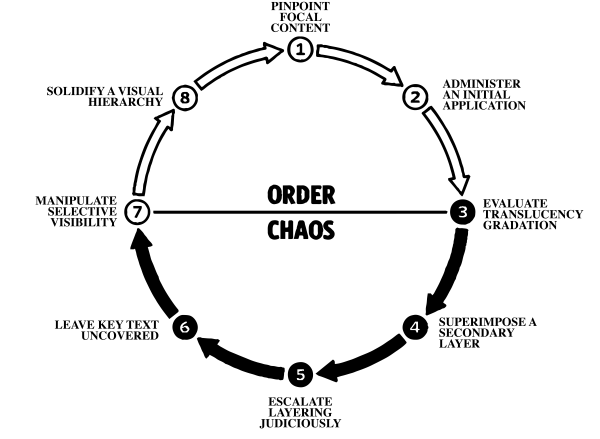
The Painter's Tape Opacity Modulation Strategy begins with a comprehensive assessment to delineate key sections for emphasis or obfuscation, enabling the identification of critical content that warrants heightened visibility while designating supplementary information for reduced prominence. Next, strategically apply a singular strip of painter’s tape across less critical textual segments to induce a subtle haze effect, creating controlled transparency that preserves the underlying text's legibility while modulating its visual impact. Following this, perform an evaluative analysis to determine the legibility of the obscured text, ensuring the desired haze effect balances visibility and textual obscurity. Implement additional layers of tape where pronounced opacity is warranted, maintaining some perceptibility of the underlying text to augment emphasis on specific elements without negating readability. Gradually build up layers on sections intended to recede into the background, thereby establishing a visual hierarchy that differentiates foreground and background content. It is crucial to keep key textual elements free from tape or apply minimal layering to preserve clarity and cognitive accessibility, enhancing focus on vital information. Employ selective layering techniques to blur certain words while maintaining clarity in others, fostering a layered interpretative experience that guides the reader's attention. Finally, conduct a synthesis to ensure the layered opacity effectively establishes clear visual priorities within the text, confirming that the information architecture supports optimal reading comprehension and engagement.
Impermeable Obscuration Technique
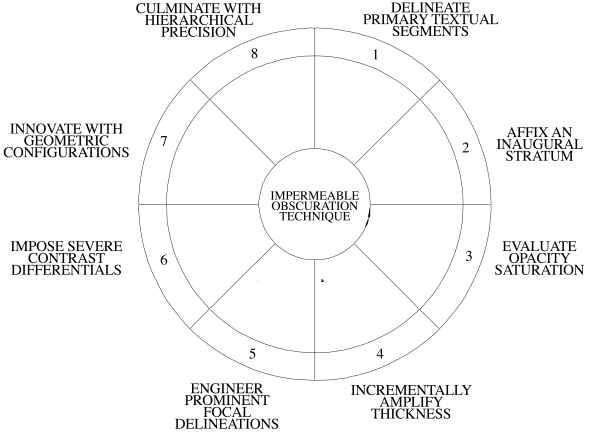
The Impermeable Obscuration Technique Protocol commences with the identification of specific areas that necessitate profound concealment or overt prominence within the visual field. To achieve this, employ a singular layer of duct tape, acknowledging its inherent capacity to immediately obfuscate text due to its impenetrable opacity. Following application, scrutinize the extent to which the underlying content is effectively obscured, as even one application will yield substantial visual blockage. Additional layers should be prudently introduced only to regions where the complete eradication of legibility is imperative, ensuring total suppression of the content in those areas. It is essential to exempt pivotal text from coverage or to encapsulate it within borders of opaque duct tape, thereby accentuating its significance amidst the visual noise. Extend duct tape across expansive portions of the page, effectuating a stark dichotomy between the visible narrative and the obliterated segments. Furthermore, manipulate the tape into intricate shapes or fine linear forms to introduce a sophisticated interplay of opacity, creating nuanced patterns of emphasis and omission. Finally, execute a meticulous review of the composition, ensuring that the juxtaposition of concealed and unconcealed sections manifests a deliberate, structured visual dominance hierarchy.
Washi Tape Opacity Modulation Framework
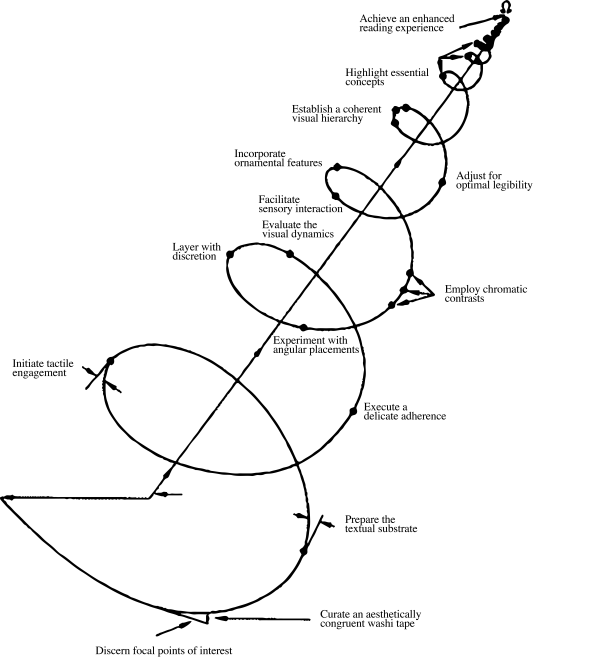
The Washi Tape Opacity Modulation Framework initiates with the identification of focal points of interest, involving a scrupulous examination to meticulously delineate specific textual segments that require pronounced embellishment or deliberate attenuation for optimized cognitive assimilation. Following this, curate an aesthetically congruent washi tape that embodies visual allure and harmonizes with the requisite opacity levels, contemplating intricate patterns and hues that synergistically complement the overarching textual milieu. Prepare the textual substrate by ensuring that the reading medium is meticulously immaculate and devoid of obstructions, thus establishing an optimal canvas for the precision-oriented application of adhesive tape.
Engage tactilely by aligning the leading edge of the washi tape with exacting precision at the predetermined commencement point, employing a steady and calibrated hand to ensure exactitude during the nuanced application process. Execute a delicate adherence by affixing the tape with gentle yet unwavering pressure to obviate the entrapment of air bubbles, facilitating the effective manifestation of the inherent translucency characteristic of the washi tape. Subsequently, evaluate the visual dynamics by scrutinizing the complex interplay between the washi tape and the underlying text, meticulously documenting areas where opacity is accentuated and legibility is correspondingly diminished.
Layer with discretion by introducing supplementary layers of washi tape with judicious precision, particularly in designated zones necessitating enhanced opacity, while assiduously maintaining a harmonious equilibrium between visibility and obfuscation. Experiment with angular placements to manipulate the orientation and positioning of the tape, constructing distinctive visual trajectories that adeptly guide the reader’s focus toward critical information of paramount importance. Employ chromatic contrasts to leverage the washi tape’s color spectrum, engendering striking visual contrasts that amplify the prominence of essential textual elements and facilitate cognitive engagement.
Incorporate ornamental features by infusing the application with artistic embellishments or motifs inherent to the washi tape, thus enhancing the visual engagement of the reading material and rendering it aesthetically captivating. Facilitate sensory interaction by encouraging tactile engagement with the multilayered washi tape, allowing readers to appreciate the nuanced textural variances that enrich their immersive reading experience. Adjust for optimal legibility by continuously monitoring the intricate interplay of opacity and clarity throughout the application process, ensuring that vital information remains readily accessible and comprehensible.
Establish a coherent visual hierarchy that achieves a meticulously structured arrangement, accentuating key textual elements while concurrently minimizing distractions to enhance the overall cognitive reading experience. Highlight essential concepts by effectively drawing attention to significant ideas or thematic elements within the text, reinforcing their preeminence through the thoughtful and strategic application of decorative tape. The culmination of these methodical techniques results in a meticulously transformed textual landscape that promotes clarity, engagement, and comprehension, ultimately facilitating an enriching and effective reading journey.
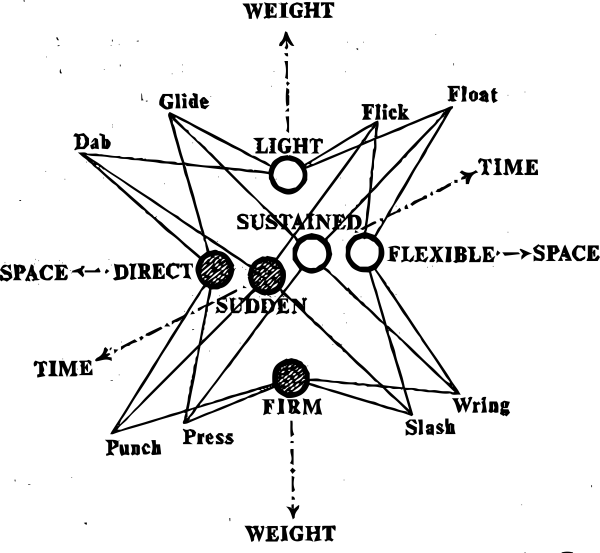
Tactile Dynamics of Tape Application: A Star-Shaped Framework for Exploring Weight, Time, and Spatial Manipulation in Enhancing Reading Comprehension
This star-shaped diagram illustrates the complex interrelationships between various tactile techniques and their influence on weight, time, and spatial manipulation in the context of enhancing reading comprehension through tape application methods.
At the center of the diagram, key terms such as dab, glide, light, flick, float, and flexible represent the diverse techniques used when applying tape. Surrounding these core concepts are directional arrows indicating the dual dynamics of light → weight and firm → weight. These arrows suggest that a light touch during tape application can produce an ethereal quality that enhances visibility and allows for greater reader focus on critical information. In contrast, a firm application contributes to a pronounced weight in the text, effectively directing attention to important areas.
Additionally, arrows labeled time emphasize the temporal considerations inherent in these techniques. The rhythm and duration of actions such as dab, glide, and flick can influence the pace at which readers engage with the material, affecting their cognitive processing. For example, a quick flick may facilitate rapid scanning, while a gliding motion allows for a more thoughtful exploration of the text.
Extending outward from the central core, terms such as wring, slash, press, punch, and direct illustrate various methods of manipulating tape to create different levels of opacity and emphasis. These actions highlight the potential to alter spatial perception and guide the reader's focus through strategic tape application.