Table of Contents
Package System
The Estonian Academy of Arts (commonly abbreviated as EKA, derived from the Estonian Eesti Kunstiakadeemia) has garnered attention for its inventive and unconventional Package System, also colloquially referred to as the “Package Pigeon”. This system is a complex network of ziplines and lifts that connect various sections and floors of the university, enabling the seamless transportation of objects between students. Initially devised by the Graphic Design Department, the system employs recycled plastic food containers attached to ropes, providing a resourceful means of exchanging items. The primary purpose of this system was to facilitate the movement of goods—originally focused on smoking-related items—across the campus, thus offering a practical solution to the daily needs of students. Over time, this innovative project evolved significantly, fostering a sense of camaraderie among students and encouraging further development of containers designed to carry diverse objects, such as the “warm food package,” the “letter package,” and even the more unconventional “weapon package.”
Origins and Historical Development
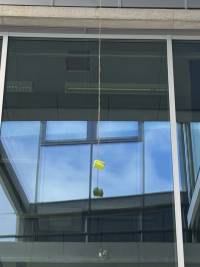

The origins of the EKA Package System can be traced back to early 2024, when a student from the Graphic Design Department faced a logistical challenge while attempting to communicate with someone standing below the balcony. The issue stemmed from the difficulty of catching the person's attention without interrupting an ongoing conversation or resorting to the use of modern technology, such as mobile phones. This dilemma inspired the creation of a rudimentary yet ingenious solution: a handcrafted box attached to a rope, which could be lowered discreetly to initiate contact without disrupting the flow of conversation. The introduction of this simple box not only allowed for more intimate and natural interactions, but it also paved the way for its first functional use: the transportation of a cigarette from one person to another.
The success of this initial exchange quickly led to the expansion of the system into a two-way communication and transportation method, where both parties worked collaboratively to assist each other. Within a matter of months, the idea gained significant popularity, and a second zipline was introduced, connecting the Graphic Design Department's balcony to the Architecture Department, one floor above. This new connection allowed for the transport of fragile items, such as bottles of prosecco and vodka, particularly useful during events such as EKA’s birthday celebration. The ease and convenience of this system soon made it an indispensable part of campus life, and further connections were established, creating a network that spanned multiple departments and levels of the university.
The initial design of the box was rudimentary—a 7 cm x 5 cm x 3 cm neon-yellow cardboard container fastened to a rope with materials scavenged from the university’s graphic design baccalaureate department. However, the box’s exposure to inclement weather soon led to its destruction. The undeniable practicality of the Package Pigeon inspired students to embark on a redesign process, with the primary objective being to create a more durable, weather-resistant container. After numerous trials and extensive testing, the use of recycled plastic food containers emerged as the most suitable option. These containers offered several advantages: they were readily available, highly customizable, flexible, resilient, and, most importantly, water-resistant. This redesign marked a turning point in the system’s evolution, leading to the mass production of these containers and the establishment of a highly sophisticated network.
Materials and Construction
The materials used in the Package System were selected with careful consideration of five critical factors: availability, cost, durability, weather resistance, and adaptability. The initial iteration of the box, crafted from neon-coloured cardboard salvaged from a garbage bin, was chosen for its low cost and immediate availability.
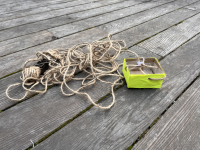

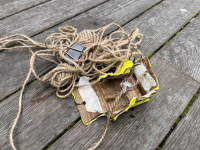

However, as the limitations of this material became apparent—particularly its vulnerability to weather—the need for a more robust solution became evident. After exploring several alternatives, including wood and tin, the decision was made to use recycled plastic food containers. These containers not only met all the necessary criteria but also offered several additional benefits, including ease of customisation, flexibility in shape, and an inherent resistance to water, making them ideal for outdoor use.
Wood and tin were briefly considered as potential materials; however, they were ultimately deemed impractical due to their scarcity and the complexity of working with them in large quantities. Plastic, by contrast, provided a more efficient and cost-effective solution. Its lightweight nature and pre-formed structure minimised the need for extensive preparation, while its adaptability allowed students to make modifications easily (see paragraph Modifications and Technological Advancements).
Modifications and Technological Advancements
Over time, the Package Pigeon system underwent several enhancements, driven by the collective creativity and resourcefulness of the Package Pigeon Committee. The first notable modification was introduced with the very first box: the addition of a small bell to the bottom of the container, which served to alert the recipient that the delivery had arrived. This simple yet effective innovation improved the system’s functionality by ensuring that the receiving party would be immediately notified of the package’s availability.
With the transition to plastic containers, further modifications were implemented. The containers were painted in bright, vibrant colours to enhance visibility, and a lever mechanism was added to improve ease of use. As the system grew more sophisticated, larger packages were equipped with small motors, allowing for the safe and efficient transport of heavier and more delicate objects. These motorised boxes represented a significant leap forward in the system’s technological capabilities, enabling students to send items with greater precision and reliability.
In addition to these functional upgrades, the Package Pigeon system also became a canvas for personal expression. As different departments began to adopt the system, students started decorating their boxes with distinctive designs and motifs, often as a way of asserting dominance or identity within the university. These personalised boxes became a hallmark of the system, reflecting the diversity and creativity of the EKA student body.
System Usage and Package Classification
The versatility of the Package Pigeon system allowed it to accommodate a wide variety of items, ranging from everyday essentials to more specialised tools and projects. The system’s adaptability meant that it could be used to transport anything from small personal items to large, delicate objects. To address the varying needs of students, several different types of Package Pigeons were developed, each designed to handle specific types of goods:
- Common Packages: These packages were used for the transport of everyday items, including letters, cigarettes, lighters, and art supplies. Over time, the scope of common packages expanded to include more diverse items, such as phone chargers, art materials, and even money. Food packages, which were also considered common, were typically lined with aluminium foil to help retain heat and make cleaning easier. In some cases, these packages were designed for single use, particularly when transporting messy or perishable food items, due to the difficulty of cleaning them for reuse.
- Delicate Packages: Similar in function to common packages, delicate packages featured additional padding and softer inner linings to protect fragile items, such as glassware, ceramics, and alcoholic beverages. These packages allowed students to transport delicate items with ease, ensuring that they arrived at their destination in good condition.
- Big Packages: These larger packages were specifically designed for the transport of bulkier items, such as A1-sized paper rolls, backpacks, and other large materials. Due to their size and the increased amount of resources required for their construction—such as extra glue, rope, and larger containers—these packages were more costly to produce. Consequently, they were made available for rent, though their use was limited to connecting specific areas of the campus, such as the first, third, and fifth floors.
- Weapon Packages: A later addition to the system, weapon packages emerged in late 2024. Introduced by an unidentified department, these packages were designed to covertly transport weapons, often disguised as common packages. The appearance of weapon packages coincided with growing tensions within the academy and played a pivotal role in the conflicts that followed.
The "Package Pigeon War"
By the end of 2024, the introduction of Big Packages and the expansion of the system to include advanced ziplines and lifts connecting key areas of the academy sparked unrest among certain factions within the student body. A group calling itself “Birds Are Fake” formed in opposition to the continued use of the Package Pigeon system. This group believed that the increasing reliance on the package system was detrimental to the traditional forms of communication and movement within the academy, leading to growing tensions between departments.


In response, the Graphic Design Department spearheaded the formation of a rival group known as “Packed with Love”, which sought to defend the Package Pigeon system from its detractors. Ironically, this group also became responsible for distributing weapons through the system, escalating the conflict between the two factions. Members of “Packed with Love” began sending packages rigged with paint-splattering devices and “smell bombs”—small containers that, when opened, released an unpleasant odour into the recipient’s department. These pranks and retaliatory measures fueled the rivalry, creating a chaotic and disruptive atmosphere on campus.


The conflict, dubbed the “Package Pigeon War,” raged on for several months, with both sides engaging in acts of sabotage and mischief. The situation grew increasingly unmanageable until, in January 2025, the EKA Student Council was forced to intervene. The council implemented a ban on the use of the Package Pigeon system for any form of commodity transportation that was not conducted via direct, hand-to-hand exchange. This decision effectively brought an end to the Package Pigeon War and marked the conclusion of one of the most unique chapters in the history of the Estonian Academy of Arts.